
Disability Horizons Shop Disability Living Aids and Accessories

Call us

0800 567 7812

Duncan Edwards

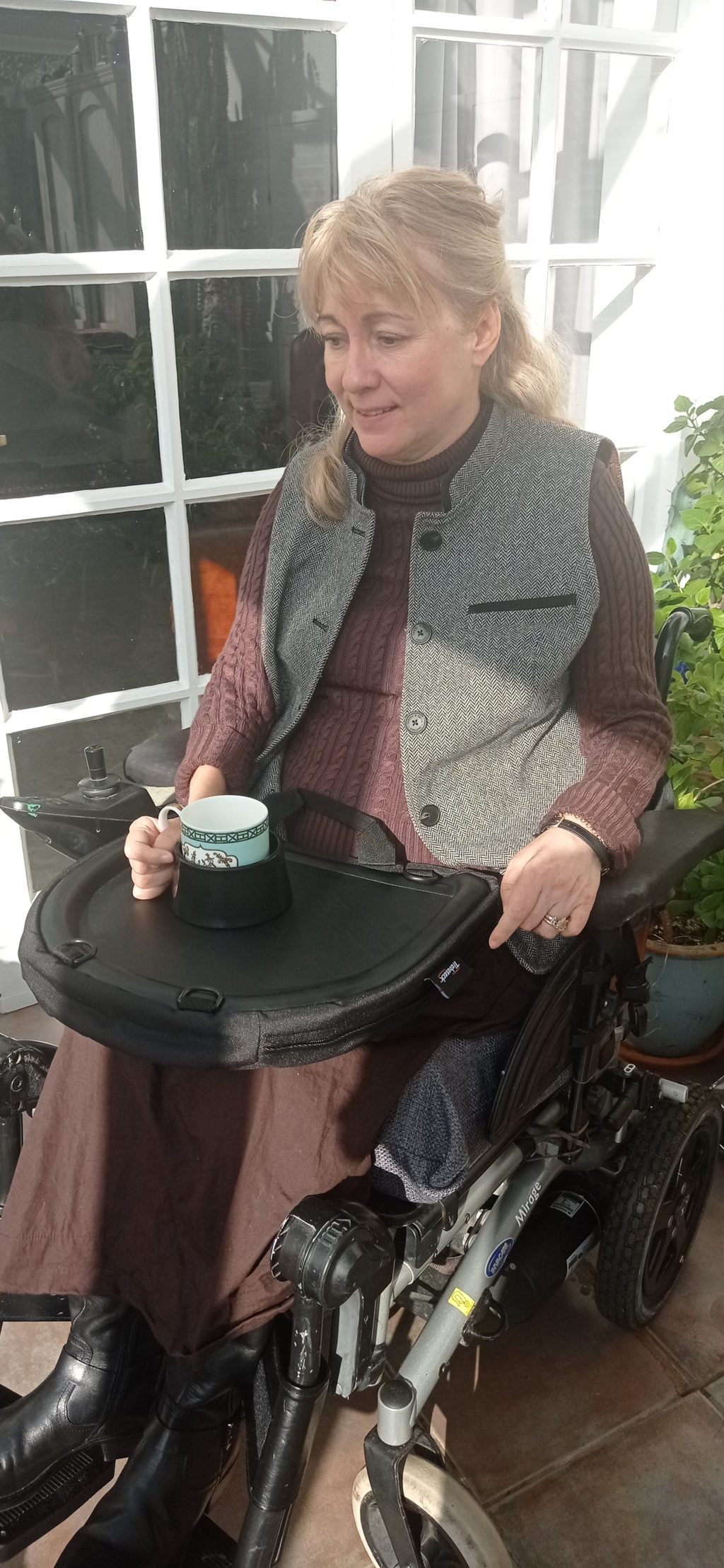
Duncan Edwards manages the Disability Horizons Shop, where he focuses on sourcing practical, well-designed products that improve everyday life for disabled people. His work reflects lived experience rather than distant theory, shaped by family, not policy. His wife Clare, an artist and designer, co-founded Trabasack, best known for its original lap desk bag. After sustaining a spinal injury, Clare became a wheelchair user. That change brought a sharper perspective to her design work and turned personal need into creative drive. Trabasack grew from that focus — making useful, adaptable products that support mobility and independence. Their son Joe lives with Dravet syndrome, a rare and complex form of epilepsy. His condition brings day-to-day challenges that few families encounter, but it has also sharpened Duncan’s eye for what’s truly useful. From feeding aids to communication tools, he knows how the right product can make a small but vital difference. These experiences shape the decisions he makes as shop manager. It’s why he pays close attention to detail, asks hard questions about function and accessibility, and chooses stock with a deep awareness of what people actually need. Duncan’s role in the disability community is grounded, not performative. He doesn’t trade in vague ideals — he deals in things that work, because he’s spent years living with the frustrations of an environment that doesn’t always work for his family.

A modern Australian pharmacy counter featuring a smiling pharmacist handing a prescription bag to a customer. The background displays neatly arranged shelves stocked with medicines and health products. The counter includes a small Australian flag and eucalyptus leaves as decorative elements, adding a local touch to the bright and welcoming environment.

Are Instant Scripts Safe? A Guide to Online Medical Services

Are Instant Scripts Legit? A Guide to Online Medical Services As the world of healthcare continues to evolve, different countries are adopting innovative approaches to improve accessibility and convenience for patients. While telehealth services are becoming increasingly common in the UK and USA, our Australian readers have access to a unique system called “Instant Scripts.”

Are Instant Scripts Safe? A Guide to Online Medical Services Read More »

A person seated in a wheelchair receives a stack of orange and white papers from someone standing nearby. The setting is softly blurred, suggesting an indoor environment.

5 Tips to Researching Funding Options for Assistive Devices

A quick guide to finding funding for assistive devices, exploring options such as government programs, grants, foundations, crowdfunding, and medical savings accounts across the UK and USA. It’s challenging enough to go through life with a disability or chronic health condition. Often, financial constraints make it even more difficult when you need to cover the

5 Tips to Researching Funding Options for Assistive Devices Read More »

The image shows a black icon consisting of a pencil diagonally placed over a document, with the letters "PIP" written below. It appears to represent the process of filling out forms, specifically related to Personal Independence Payment (PIP). The design is simple and graphic, using solid black shapes on a light gray circular background.

Personal Independence Payment (PIP) Applications: How the PIP Form Writer GPT Can Help

Personal Independence Payment (PIP): A Clearer, Calm Way to Complete Your Form Summary: Many disabled people find the PIP form exhausting, confusing and emotionally draining — especially with advice services stretched beyond capacity. This guide explains how our PIP Form Writer tool can help you describe your day-to-day barriers in your own words. It does

Personal Independence Payment (PIP) Applications: How the PIP Form Writer GPT Can Help Read More »

A graphic with a hand-drawn sketch of an inclusive office space showing diverse employees working at desks. The top text reads "New Guidance for Reasonable Adjustments at Work," while a smaller box at the bottom says "Making Work Accessible for Disabled People." The background uses soft pink and mustard tones to highlight the text and image.

New EHRC Guidance: How Employers Can Support Disabled Employees in a Hybrid Work World

Understanding the New EHRC Guidance on Reasonable Adjustments for Disabled Employees   The Equality and Human Rights Commission (EHRC) has recently published new guidance to help employers understand their legal obligations and the steps they can take to support disabled employees, especially in hybrid working environments. This guidance comes as a crucial resource for organizations

New EHRC Guidance: How Employers Can Support Disabled Employees in a Hybrid Work World Read More »

Two healthcare workers in white uniforms and gloves are working together in a medical setting. They are attending to a medical manikin in a hospital bed, which is connected to various medical equipment, including a breathing tube. Both workers are focused on the task, with one reaching towards the manikin and the other preparing a medical tool. The setting appears to be a clinical training environment.

The Role of Disabled People in Healthcare: Opportunities, Challenges, and the Path Forward

Understanding the Landscape of Healthcare Employment for Disabled People   The healthcare sector is often seen as a symbol of progress and care, where new medical breakthroughs and patient support come together to make lives better. However, finding jobs in this field can be challenging, especially for disabled people. Even though there have been improvements

The Role of Disabled People in Healthcare: Opportunities, Challenges, and the Path Forward Read More »

Shopping Basket