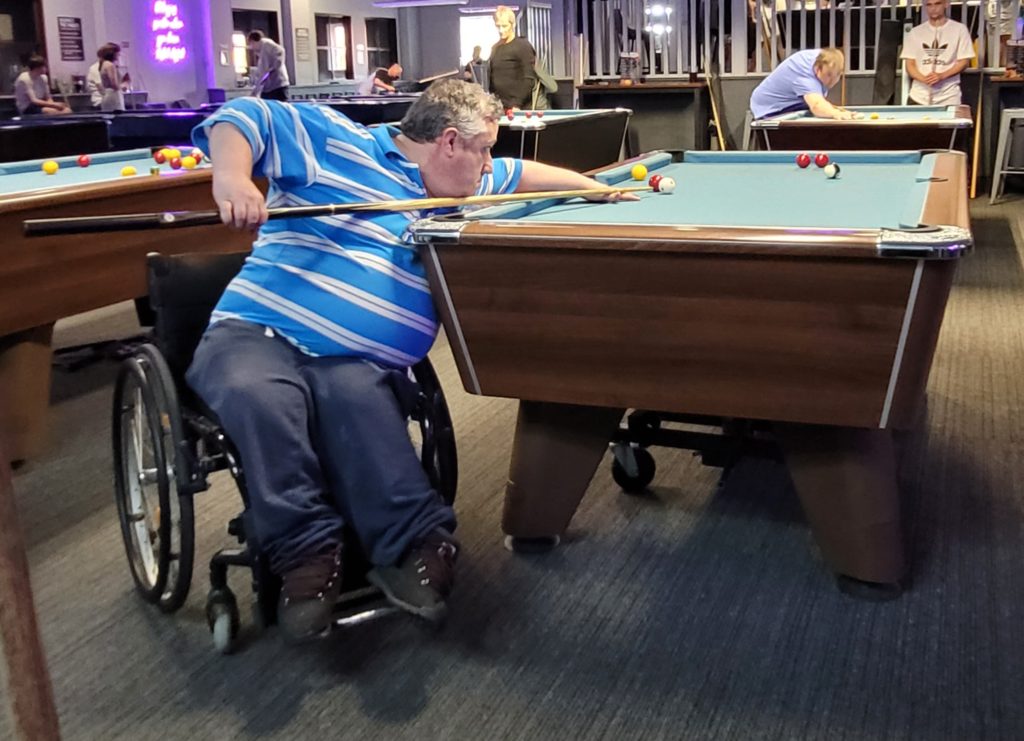
When Disability Horizons first featured wheelchair pool player Gareth Clarke, he was already pushing hard for better access and visibility in cue sports. Since then, his journey has moved into a new phase, with sponsorship backing, a developing brand and a growing focus on changing perceptions about who the game is for.
This is what has happened since that first article – and where Gareth hopes to take things next.
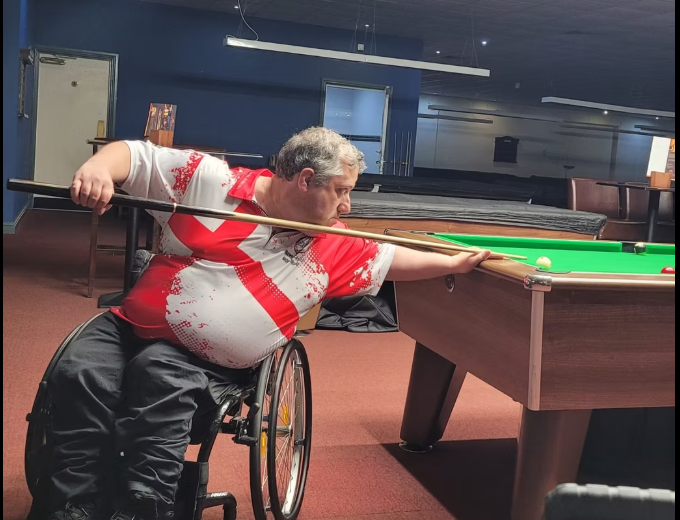
Wheelchair Pool Sponsorship: Gareth Clarke’s Journey
Gareth decided he wanted to see how far he could take his game and his advocacy. That meant backing himself and approaching brands he already trusted.
“I’ve been building my wheelchair pool journey and putting myself out there a bit more,” he says. “So I started reaching out to companies I genuinely respected in the cue sports world.”
One of those companies was Taom, a well-known performance brand used across professional snooker and pool. Gareth contacted them to explain who he is, how he plays and what he is trying to build as a wheelchair player.
He has also had support from AC Magic – Andrew Cooper, an award‑winning magician who has helped by building and managing Gareth’s website, keeping his growing activity organised and visible online.
“Getting that support has made a real difference — not just in equipment or tools, but in confidence and being able to focus more on my game and building things the right way.”
Gareth is open to working with more partners in the future, but he is taking a considered approach.
“At the moment I’m still open to growing that side of things, but I’m being careful and trying to build the right partnerships that actually fit what I’m doing rather than just adding names.”
Rollin Cue: Gareth Clarke’s Wheelchair Pool Brand
Alongside his playing career, Gareth has started developing his own brand: Rollin Cue – Never Give Up.
“Rollin Cue came from wanting something of my own that represents who I am and what I’m about,” he explains.
Gareth was born with spina bifida and now plays from a wheelchair, but cue sports have been a constant thread in his life. Rollin Cue brings those parts of his identity together.
“The Never Give Up part is exactly how it sounds — it’s about not letting anything hold you back from doing something you enjoy. There’s always a way, even if you have to do things differently.”
Rollin Cue is still in its early stages. Gareth is experimenting with clothing ideas and exploring how to turn the name into a brand that resonates with both disabled and non‑disabled cue sports fans.
“Long term I’d like it to grow into something people recognise within cue sports, not just for clothing but for what it stands for — whether that’s through content, events, or just the message itself.”
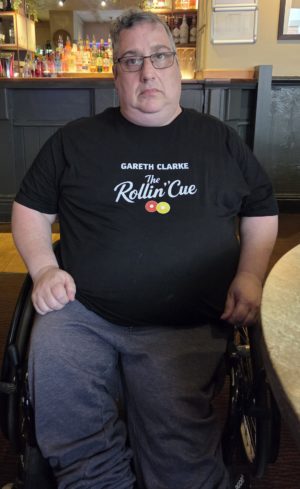
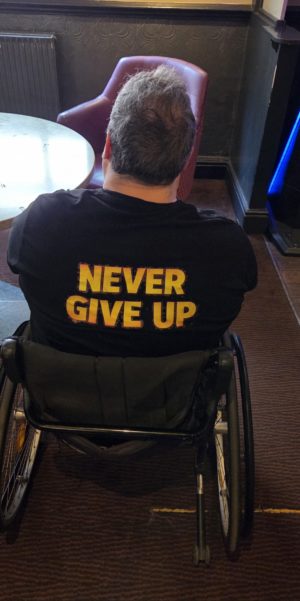
Rollin Cue is still in its early stages. At the moment Gareth doesn’t have tournament or event updates to add, but he is still training and continuing to build Rollin Cue step by step. The main place to follow his progress is his website, where he shares updates, photos and the first prototype shirt designs for the brand.
Wheelchair pool today: slow progress and familiar barriers
In his first feature, Gareth described the practical challenges of playing from a wheelchair: getting around tightly packed tables, lining up shots from a seated position and dealing with venues that were never designed with wheelchair users in mind. Some things have improved, but many of the core barriers remain.
“I think awareness of wheelchair pool is slowly improving, but it’s still not where it should be yet,” he says.
“You do still notice that a lot of venues and clubs aren’t fully set up for wheelchair users, whether that’s access around tables or just general awareness, but it does feel like things are starting to move in the right direction.”
For Gareth, the biggest barrier is a mix of physical access and lack of understanding.
“A lot of people don’t realise that wheelchair users can play pool, or they assume it’s not possible, which isn’t the case at all. That’s part of what I’m trying to change really — just showing that it can be done and getting more visibility around it.”
Competition remains a core part of Gareth’s life. Since his last article, he has continued to enter events and focus on consistency and improvement.
At the moment Gareth doesn’t have any new tournament or event results to add since his last feature, but he is still training and working on his game while building Rollin Cue step by step.
Advice for Newly Disabled People Returning to Pool
One of Gareth’s priorities is reaching people who feel that disability has cut them off from the game they love.
“If someone had just become disabled and thought they couldn’t play pool anymore, I’d just say don’t write it off straight away,” he says.
“It might feel different at first, and you might have to adapt how you play, but it’s definitely still possible. There’s always a way if you’re willing to stick with it.”
For Gareth, enjoyment comes first. Competing, building a brand and securing sponsorships all matter, but they are built on a simple foundation: staying involved with something that has always brought him joy.
“Since the last feature I’ve just been focused on building things step by step, both with my game and with what I’m trying to create around it. I’m just trying to keep moving forward and see where it takes me.”
What Is Wheelchair Pool and How Is It Played?
Gareth mainly plays Blackball, following the same rules and formats used by non-disabled players. Blackball is the game most people know as ‘Pool’ and have played in pubs.
The game rules stay the same – there are no separate “wheelchair rules” – and the only changes are physical, such as playing from a seated position and using cue extensions or mechanical rests to reach certain shots.
In most UK pubs, people are effectively playing a Blackball-style game even when the tables use American solids-and-stripes balls rather than reds and yellows. The patterns of play – two groups of balls and a final black – are very similar; it’s mainly the ball design and some finer points of the rule set that differ.
Shots are taken from the wheelchair, with the player remaining in contact with the chair. The footplate effectively acts as the “floor” – just as a non-disabled player must keep at least one foot on the floor when playing a shot, a wheelchair player must stay in contact with the wheelchair via the footplate.
Venue access is still one of the biggest challenges. Table spacing, doorways and the overall layout of a club or bar can make a big difference to how easily a wheelchair user can move around and get a clear approach to the table.
What’s Next for Gareth Clarke and Rollin Cue?
This stage of Gareth’s journey is less about one‑off milestones and more about steady, step‑by‑step progress. Sponsorship, Rollin Cue and his advocacy around accessibility all feed into a bigger aim: moving wheelchair pool forward.
“Overall since the last feature things have just been building steadily, from sponsorships to starting Rollin Cue, and I’m just focused on keeping that going.”
In the next few years, he hopes to see Rollin Cue become a recognised name in cue sports, attached to a clear message about making the game more open and welcoming.
In the next few years, Gareth hopes Rollin Cue will become a recognised name in cue sports, known as much for its “Never Give Up” message as for its clothing and content. His aim is to grow a community around the brand that shows wheelchair players and other disabled cue sport fans that there is a place for them at the table.
Whatever happens next, one thing remains constant: the mindset that sits at the heart of his brand. Rollin Cue – Never Give Up is more than a logo. It sums up how Gareth approaches the table, his career and the wider push for access in cue sports.
How to follow and support Gareth
If you would like to support Gareth’s journey as a player, brand‑builder or advocate, here’s how to reach him:
- Email: gareth.clarke99@outlook.com
- Rollin Cue – Never Give Up: You can follow Rollin Cue and Gareth’s journey at his website:
https://onepotatatime.wixsite.com/one-shot-at-a-time