As editor of Disability Horizons, I am always interested in how disabled-led businesses work in different countries, especially when they face challenges similar to our own.
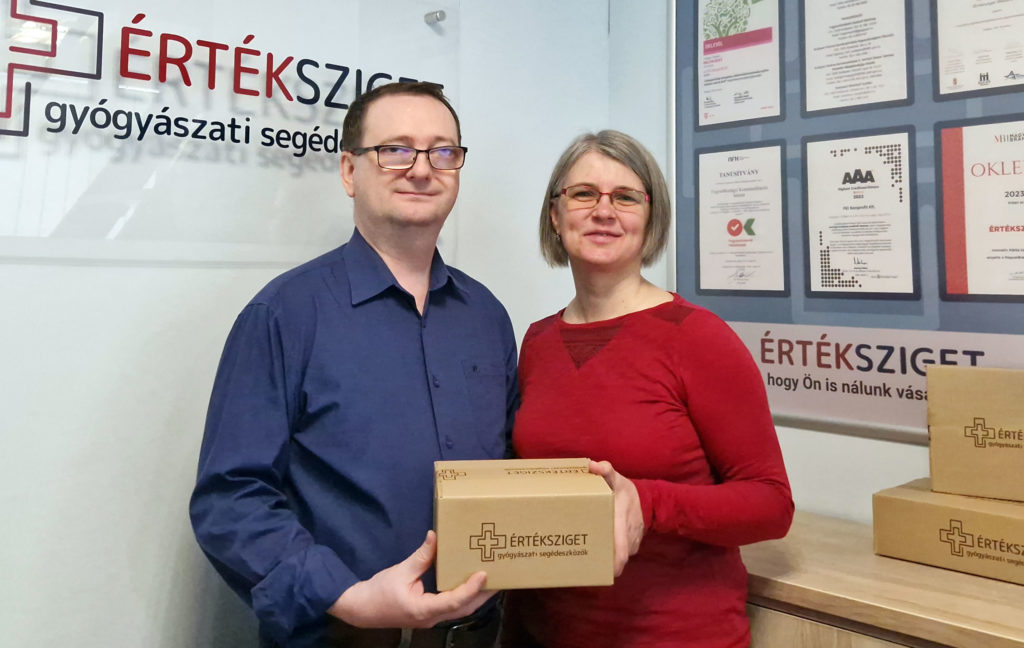
Hungarian founder Zoltán József Szabó contacted us to share the story of Értéksziget Medical Aids Shop and Online Store, known in Hungarian as Értéksziget gyógyászati segédeszköz bolt és webáruház, which he runs with his wife and co-founder Alexa.
Their experience offers a fascinating insight into how disability retail and home-care support are organised in another part of Europe, and how a shop very much like ours has grown within a more medical and insurance-led system.
It also contains practical lessons for disabled entrepreneurs: from not confusing a good cause with a business model, to building around your real strengths and limits, and treating accessibility as an ongoing process of listening rather than a single technical fix.
We are publishing their story as a two-part series. This first article focuses on what UK disabled customers, family carers and retailers can learn from Értéksziget’s approach to funding, equipment choice and accessible customer service. The second will explore the business tips and hard-earned lessons that disabled founders across Europe can apply to their own projects.
— Duncan Edwards, Editor, Disability Horizons
Most of us only think about disability equipment when we suddenly need it. A hospital discharge, a new diagnosis or a change in mobility can mean finding a shower chair, walking aid or pressure-relieving mattress within days. At that point, the quality of information and advice often matters just as much as the product itself.
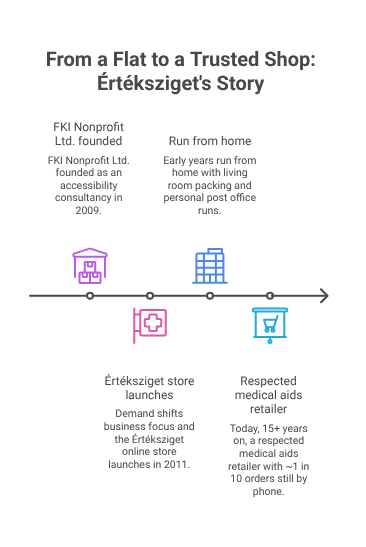
That is something disabled entrepreneurs Alexa and Zoltán József Szabó understand well. When they founded FKI Nonprofit Ltd. in Hungary in 2009, they initially planned to improve accessibility through consultancy, helping organisations make websites and public spaces more accessible. What they discovered instead was that disabled people and family carers were struggling to find practical equipment that simply was not available locally.
That unexpected demand transformed their business. Two years later, in 2011, they launched the Értéksziget online store.
Értéksziget’s name is itself a statement of intent. In Hungarian, roughly translated, it means “Island of Value”, and the founders have kept that brand unchanged in every language because it expresses their purpose: to be a reliable, human point of reference in the complex world of medical aids, home care and rehabilitation.
Products were stored around their flat, orders were packed in the living room and parcels were carried to the local post office. More than 15 years later, Értéksziget has grown into a respected medical aids retailer and online store, while staying focused on the everyday problems customers bring through the door.
Although Hungary’s disability support system differs from the UK’s, many of the challenges Alexa and Zoltán describe will sound familiar. Families trying to choose the right equipment, carers searching for trustworthy advice and disabled people balancing cost against independence are experiences shared across Europe.
“We wanted to do more than talk about independence. We wanted to put practical tools into people’s hands.”
— Zoltán József Szabó, Értéksziget
What You Need to Know About Disability Retail in Hungary
| Topic | Key takeaway |
|---|---|
| Equipment funding | Many products depend on reimbursement rules, leaving families to pay privately for alternatives that better suit everyday life. |
| Family carers | Relatives often coordinate equipment, transport and home adaptations after hospital discharge. |
| Customer service | Offering different ways to order removes barriers for many disabled customers. |
| Accessible information | Plain-language guidance helps people choose and use equipment with confidence. |
| Business approach | Listening to customers shaped the company’s direction far more than its original business plan. |
How Disability Equipment Funding Works in Hungary
Hungary’s funding system is built around medical reimbursement. Many medical aids can be purchased with public health insurance support if they meet specific prescribing rules and appear on approved reimbursement lists. Products outside those arrangements are usually paid for privately.
That creates a familiar dilemma. A wheelchair, knee brace or shower chair may technically meet the clinical criteria, but another product could be lighter, easier to use or better suited to someone’s home. The more suitable option may simply cost more than a family can afford.
Alexa and Zoltán say they regularly meet customers facing exactly that choice. Some arrive expecting to collect a reimbursed product but decide to buy something different after comparing the available options and considering how they actually live. :contentReference[oaicite:2]{index=2}
While the UK’s systems are organised differently, disabled people here also know that receiving equipment is rarely straightforward. Availability varies, assessments take time and many people choose to buy additional equipment themselves because it better suits their circumstances.
UK and Hungary: Different Systems, Similar Challenges
| United Kingdom | Hungary |
|---|---|
| Equipment provision varies between NHS and local authority services. | Many products depend on national reimbursement rules and approved product lists. |
| Some people buy additional equipment privately to better meet their needs. | Families often purchase non-reimbursed products themselves when better options are unavailable through the funding system. |
| Retailers often help customers compare products alongside statutory provision. | Retailers frequently guide customers through the differences between reimbursed and privately purchased equipment. |
The systems are different, but the underlying question is remarkably similar: which product will actually work in everyday life?
Why Do Families Often Have to Buy Disability Equipment Themselves?
For Alexa and Zoltán, this is where disability support becomes most personal.
Hospital treatment may end when someone is discharged, but everyday life is only just beginning. Families suddenly have to work out how someone will get in and out of bed, use the bathroom safely or move around the house. Those decisions often have to be made quickly, with little practical guidance.
Customers rarely arrive asking for a particular product. Instead, they describe situations.
- How do we stop Mum falling in the bathroom?
- Will this fit through the doorway?
- How do we help Dad stand up safely?
- What do we need before they come home from hospital?
Those conversations shape the advice Értéksziget gives every day. Rather than beginning with technical specifications, staff start by understanding the person’s home, daily routine and the support available around them.
Why Family Carers Play Such a Big Role in Disability Support in Hungary
One message came through repeatedly during our interview: family carers often become the people holding everything together.
Relatives arrange prescriptions, buy equipment, adapt homes, organise transport and provide much of the physical support that allows someone to continue living independently. That experience is not unique to Hungary. Across Europe, many carers find themselves taking on complex responsibilities almost overnight.
Alexa and Zoltán believe one thing is often missing from this process: accessible information. Families do not necessarily need pages of medical terminology. They need straightforward answers to practical questions about choosing equipment, using it safely and recognising when professional advice is needed. :contentReference[oaicite:4]{index=4}
How Accessible Health Information Supports Independent Living
That belief led Értéksziget to build its Knowledge Centre alongside its retail business.
Rather than organising information around clinical terminology, many articles begin with the situations families actually face. Someone searching for help with incontinence, for example, is far more likely to ask why a relative is leaking overnight than to search for absorbency ratings or product classifications. The information reflects those real questions before introducing more technical guidance where necessary.
The presentation matters as much as the words. Zoltán, who has a severe visual impairment, uses screen magnification software, specialist equipment and a programmable mouse every day. His own experience has influenced how the website is organised, favouring short sections, clear headings and uncluttered layouts that are easier to navigate.
“Health information has little value unless the reader can understand it and knows what to do with it.”
— Zoltán József Szabó, Értéksziget
How Accessible Customer Service Helps Disabled People Buy the Right Equipment
One of the most interesting lessons from Értéksziget is about removing barriers from the buying process.
When the online shop first launched, Alexa and Zoltán assumed customers would simply place orders through the website. Instead, they found many older customers, blind and partially sighted people and those with limited digital confidence struggled with registration, payment or selecting delivery options.
Rather than expecting customers to adapt, the business adapted its service.
Telephone ordering became a standard part of the customer journey, allowing staff to complete orders while talking through each person’s circumstances. Today, around one in ten orders are still placed by phone, demonstrating that accessibility is about offering genuine choice rather than directing everyone towards the cheapest or fastest option for the retailer.
Email allows customers to send photographs, measurements and product details, while webchat offers another way to ask questions without picking up the phone. The Budapest shop provides something websites cannot: the chance to compare products, feel their weight, test how they operate and discuss different options face to face.
Sometimes those conversations end with a recommendation not to buy anything at all.
If staff believe another product or service would better meet someone’s needs, they say so. Losing a sale in the short term is preferable to leaving someone with equipment that is unsuitable or unsafe.
“Accessibility is not always a striking piece of technology. Sometimes it simply means not forcing everyone through the same process.”
— Zoltán József Szabó, Értéksziget
Questions to Ask Before Buying Disability Equipment
One of the biggest lessons from Értéksziget is that the right product depends on far more than a diagnosis.
Alexa and Zoltán encourage customers to think about everyday life rather than technical specifications alone.
- Will the equipment fit through doorways and around the home?
- Can the person using it operate it safely and comfortably?
- Will a family member or personal assistant be able to move or adjust it?
- Is there enough space to store and clean it?
- Will it still meet the person’s needs six months from now?
Those practical questions often reveal that a product which appears ideal on paper may not work in someone’s home. A shower chair may be too wide for the bathroom, a rollator too heavy to lift into the car or a pressure-relieving mattress unsuitable for an existing bed. Good advice looks beyond clinical suitability to consider everyday living.
Why Disability Retail Is About More Than Selling Products
Listening to Alexa and Zoltán, it quickly becomes clear that they do not see themselves simply as retailers.
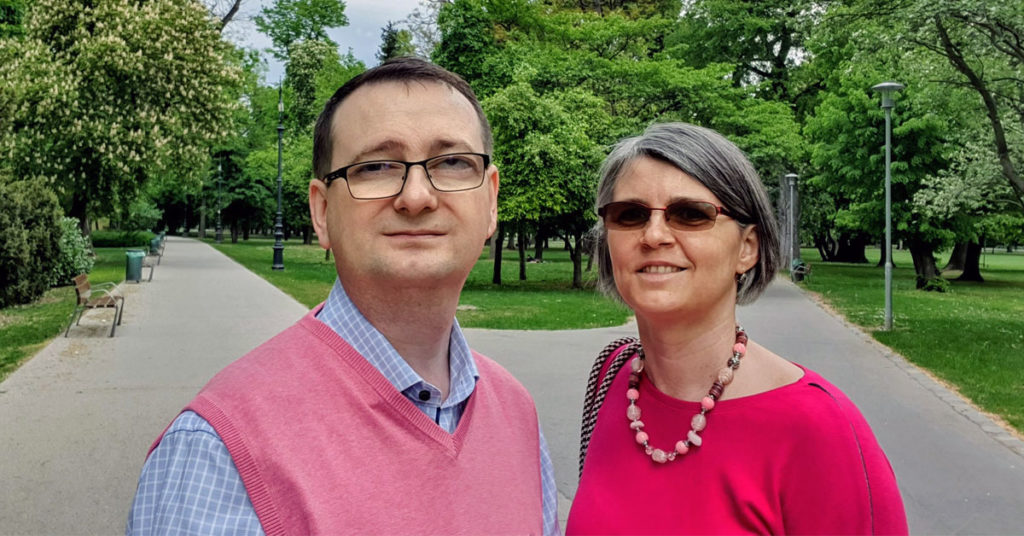
Their role often begins long before someone chooses a product. Families arrive with uncertainty rather than shopping lists, trying to understand what will help someone return home safely after illness or injury.
Sometimes the most valuable thing they provide is reassurance. Other times it is explaining the difference between two similar products or helping someone avoid spending money on equipment they do not actually need.
That approach reflects something Disability Horizons has long championed: disabled people and carers benefit from practical information that supports informed choices rather than being told there is only one correct solution.
If you are looking for practical assistive tools for daily living, understanding how equipment fits into your own home and routine is every bit as important as choosing the product itself.
What Could the UK Learn From Hungary’s Disability Retail Model?
Every country’s disability support system has strengths and weaknesses, and it’s difficult as an outsider to really understand how well alternative systems work in reality.
What stands out from Értéksziget’s experience is how closely the business stays connected to everyday life. Decisions begin with the person’s home, family, routines and ambitions before moving on to product categories and reimbursement rules.
That perspective offers useful reminders for retailers, healthcare professionals and policymakers alike.
- Clear information can be as valuable as the equipment itself.
- Accessible customer service means offering different ways for people to communicate.
- Families need practical guidance alongside products.
- Equipment should be chosen for how it works in real homes, not simply how it performs in theory.
Those are lessons that travel well beyond Hungary.
In Part 2 of this series, we’ll explore what disabled entrepreneurs can learn from Alexa and Zoltán’s journey, including why they believe lived experience is a powerful starting point for a business—but never a substitute for listening to customers or having a grounded and realistic business model.
Frequently Asked Questions About Disability Equipment in Hungary
What can the UK learn from Hungary’s disability equipment system?
Although the funding systems differ, both countries face similar challenges. Disabled people and family carers often need practical advice to choose equipment that works in everyday life rather than simply meeting clinical criteria.
How is disability equipment funded in Hungary?
Many disability products are available through Hungary’s public health insurance system if they meet reimbursement rules. Products outside those rules are usually paid for privately.
Why do families often buy disability equipment themselves?
Families sometimes choose privately funded equipment because it better suits their home, daily routines or future needs than the reimbursed option.
Why is accessible customer service important when buying disability equipment?
People have different communication preferences and access needs. Offering telephone, email, webchat and face-to-face support removes barriers and helps customers make informed choices.
What questions should you ask before buying disability equipment?
Consider whether the equipment fits your home, is easy to use safely, can be managed by carers if needed, is practical to clean and store, and will continue meeting your needs over time.
Why is accessible health information important?
Clear, plain-language information helps disabled people and family carers understand equipment choices, use products safely and know when specialist advice may be needed.