How charity shops are using AI to target resellers
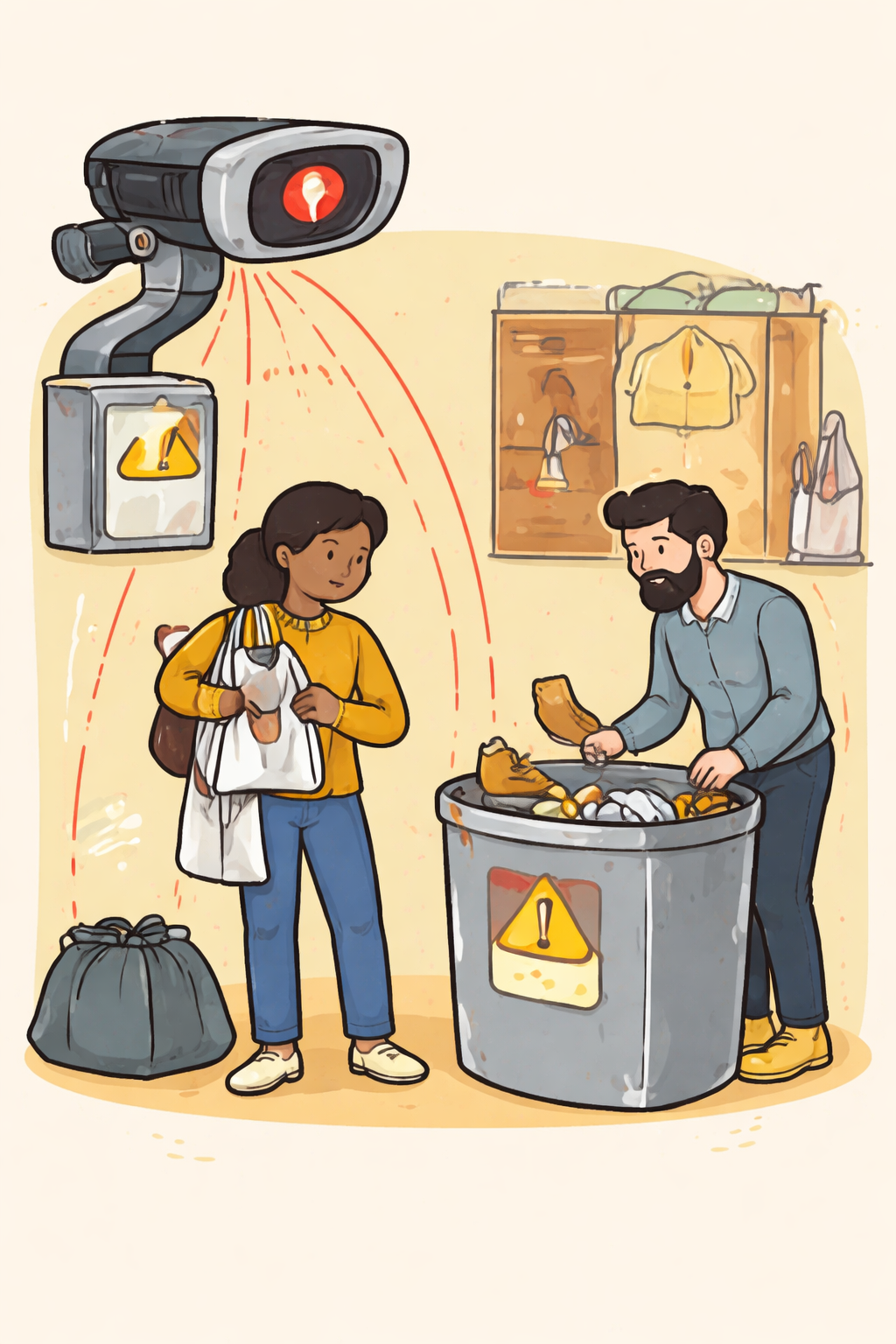
I spotted this (click to watch clip, full video is below) yesterday: a ‘thrift warehouse’ publicly congratulating itself for using artificial intelligence to identify and block resellers.
Not improve pricing.
Not train staff.
Not make online listings better.
Just surveillance.
The implication was familiar: resellers are the problem, and removing them protects people on low incomes.
That sounds tidy. It also falls apart the moment you look at how charity retail actually functions.
Fact box: What exactly is a “reseller”?
A reseller is someone who buys second-hand items and sells them on again, usually through online marketplaces or specialist platforms.
Resellers are not a single group. They include:
- People earning a full-time income
- People using reselling as a small, flexible side income
- Disabled people who resell because traditional work is inaccessible
- Collectors and specialists who focus on niche items (books, media, clothing sizes, equipment)
In charity retail, resellers typically buy items at the price set by the shop, with no special access or discounts. The charity receives immediate income and clears stock quickly.
Reselling is legal, widely practised, and already used by many large charities themselves through online sales operations.
What separates resellers from casual shoppers is how items are used after purchase, not how they are bought.
The myth that resellers “take from the poor”
The most common argument goes like this: resellers buy the good stuff, flip it online, and leave nothing affordable behind.
That assumes charity shops have no control over pricing. They do.
If a charity shop prices an item at five pounds and someone buys it, the charity has received exactly what it asked for. The money is immediate, guaranteed, and comes with no listing fees, storage costs, or returns.
If that item later sells online for fifty pounds, that does not mean the charity was robbed. It means the shop chose speed over research.
That is a business decision, not a moral failure by the buyer.
Scarcity is created by pricing and layout, not buyers
If affordable essentials are missing from a shop, that is usually the result of pricing choices, floor space decisions, or category focus.
Some shops choose to prioritise higher-margin items. Some overprice basics because they have been told everything is “worth more now”. Some reduce space for clothing or household goods to make room for bric-a-brac or giftware.
Those are internal decisions.
Blaming resellers for the outcome lets the organisation avoid harder questions about training, pricing strategy, and stock flow.
Buying items does not remove access
A key detail gets lost in these debates: charity shops are not the only place goods exist.
When a reseller buys an item, that item does not vanish. It moves location. It becomes available online, sometimes to people who could never access that physical shop in the first place.
Disabled people who cannot travel easily. People in rural areas. People who need very specific sizes, equipment, or niche items. Online resale often increases access rather than limiting it.
Pretending that charity shop shelves are the only ethical endpoint for donated goods ignores how people actually live and shop.
Waste is the real problem no one wants to talk about
If the concern is fairness, then waste should be the priority.
The scale of surplus in charity retail is often underestimated. A January 2026 report in Artefact Magazine noted that charity shops are frequently overwhelmed by donation volumes, with large proportions of donated items arriving damaged, stained, or incomplete.
The volume of donations regularly forces charities to dispose of usable stock simply because there is not enough time, space, or staffing to process it all.
Tons of usable items leave the charity retail system every year through disposal routes that benefit no one except recycling contractors. Blocking resellers does nothing to reduce that. In some cases, it makes it worse by slowing turnover and increasing backlog.
Moving items into use is the goal. Resellers do that.
What resellers actually do for charity shops
Resellers are not casual browsers. They are repeat customers who move volume.
They buy categories that often sit untouched for months: specialist books, medical equipment, obscure electronics, outdated media, niche clothing sizes.
Many of these items are invisible to the average walk-in customer. A reseller will take them, store them, photograph them, wait six months for the right buyer, and then post them halfway across the country.
Without that route, a lot of stock quietly becomes waste.
Fast stock movement keeps shops viable. Empty rails mean new donations. Slow stock means storage, sorting, and disposal costs. Resellers remove friction from that system.
Why reselling can work as an income choice for disabled people
Disabled people are not a single group, and access needs, income, and shopping habits vary widely depending on impairment, location, and support.
Many disabled people, particularly those excluded from stable employment, are more likely to live on lower incomes. For some, traditional work remains inaccessible not because of a lack of skill, but because workplaces are still built around non-disabled norms.
For some disabled people, including those with fluctuating or degenerative access needs, reselling cuts across barriers that standard employment still refuses to address.
This is not hypothetical. Disabled resellers are already using this model because it fits around barriers other work does not.
Chloe, who documents her reselling work online, is experiencing sight loss and has spoken openly about how reselling allows her to work flexibly, pace tasks around her vision and energy, and stay economically active as her access needs change. Her content focuses on the practical realities of sourcing, listing, and managing stock, not on disability as a marketing hook.
In one video, Chloe addresses the idea that resellers are somehow taking from others.
@chloes.reselling Why does it matter that I’m selling the items for a profit? I’m purchasing the items at the price that the charity shop is asking. I would never dream of haggling in a charity shop! Resellers spend a hell of a lot more in charity shops that your average Joe. Personally, I think it’s great that I get to support a charity, whilst saving clothes from landfill at the same time ☺️ Also, there is enough clothing to go around. Saying that that resellers are taking from less fortunate is ridiculous, considering the amount of clothing that doesn’t sell in charity shops and ends up with a rag man. Please let me know your opinions 👇🏼👇🏼 #reseller #reselling #thrifting #charityshops #smallbusiness ♬ original sound – isabelunhinged
That kind of work would be far harder to sustain in a traditional retail or office role, where pace, lighting, visual processing, and fixed hours are treated as non-negotiable rather than adjustable.
It can be done flexibly. Items can be listed when energy allows and packed when capacity is there. If a week is wiped out by pain, illness, or access issues, the work waits. There is no manager marking you absent or penalising you for being unpredictable. As long as you can pack securely and arrange a timely dispatch, you can do it.
It can also be scaled up or down without permission. Some people resell full-time. Others do it for a small but steady contribution that tops up benefits or other work without risking everything. For people whose income options are tightly restricted, that control matters.
There is also a skills element that often gets ignored. Reselling rewards knowledge: spotting niche items, understanding markets, writing listings clearly, managing stock. None of that depends on physical strength or fitting into a standard working day.
For some disabled people, charity shops are one of the few affordable sourcing options that exist locally. Blocking resellers does not just block “entrepreneurs”. It removes a route to paid work that already fits around barriers society has failed to remove.
Why AI-based reseller bans are a bad idea
The idea that artificial intelligence can neatly separate “good” shoppers from “bad” ones is fantasy.
What exactly flags a reseller?
Buying several items at once?
Shopping weekly instead of monthly?
Looking up items online for a price comparison?
Buying books, coats, or medical items in bulk?
That behaviour describes a lot of disabled people whose shopping is shaped by fluctuating energy, limited transport access, limited cash or the need to buy when they are physically able, as well as people on low incomes more generally.
Automated profiling does not understand real lives. It only understands patterns.
Who really gets shut out
The cruel irony is that reseller bans often hurt the very people charities claim to protect.
Disabled people are statistically more likely to experience poverty, and some rely heavily on charity retail as part of managing that reality. They are also more likely to shop in ways that look unusual to a computer system.
Artificial intelligence does not recognise lived experience. It just enforces averages.
Charity retail is about movement, not judgement
The whole point of a shop is that things come in and go out – fast.
Resellers help that happen. Disabled and low-income shoppers rely on it. Artificial intelligence that tries to decide who “deserves” to buy does not help either group.
Charity retail does not need moral filters. It needs pricing skills, respect for customers, and a clear idea of who exclusion actually harms.