Disability Pride Month takes place every July — and this year, we’re marking it by sharing stories of disabled people who have turned lived experience into purpose, income, and advocacy. Tracy Kiss’s story touches on late diagnosis, invisible disability, the shame of not “looking disabled,” and the reality of building a business around a body you can’t always predict. It’s exactly the kind of honest, unfiltered conversation Disability Pride Month was made for.
Tracy Kiss is a neurodivergent mother of two, wellness advocate, journalist, and fitness-focused content creator with over 4 million followers across social media. She lives with Hypermobile Ehlers-Danlos Syndrome (hEDS), ADHD and autism – all diagnosed late in life. Here she speaks candidly about invisible disability, the reality of building an income around a body you can’t always trust, and what she wishes she’d known sooner.
From Medical Gaslighting to a Late hEDS Diagnosis
Tracy Kiss had been in pain her entire life. She had taken every symptom to her doctor. She had reached breaking point, mustered up the courage to seek help, and been sent away with nothing – “dismissed as unknown causes, labelled as non-life-threatening so no action is required.”
After years of searching for answers, an unexpected conversation on TikTok helped Tracy identify the condition that had shaped her life for decades.
“It’s shocking to know that it takes somebody who is already suffering from the same issues to identify the symptoms in other strangers and give advice and guidance that doctors fail to address,” Tracy says. “It felt like presenting evidence to a court room – to prove to my own doctor that my symptoms do exist, and aren’t in my head or exaggerated, to then tell them what I believe my condition to be and why, for them to look over it and confirm it to be true and issue an official diagnosis.”
That diagnosis was Hypermobile Ehlers-Danlos Syndrome – hEDS – a connective tissue disorder that affects joints, causes chronic pain, fatigue, and in Tracy’s case, unpredictable collapses. She received the diagnosis in her late thirties, alongside late diagnoses of autism (ASD) and ADHD.
Many people with hEDS report years-long diagnostic delays, particularly women whose symptoms are sometimes dismissed or attributed to stress, anxiety or lifestyle factors.
“We expect the doctors and healthcare professionals to be more knowledgeable than us as patients,” she says. “But instead our questions go unanswered and we feel gaslit into living with unexplained pain and suffering with no solution. It’s soul destroying.”
Living with an Invisible Disability: Pushing Through Chronic Pain in Fitness
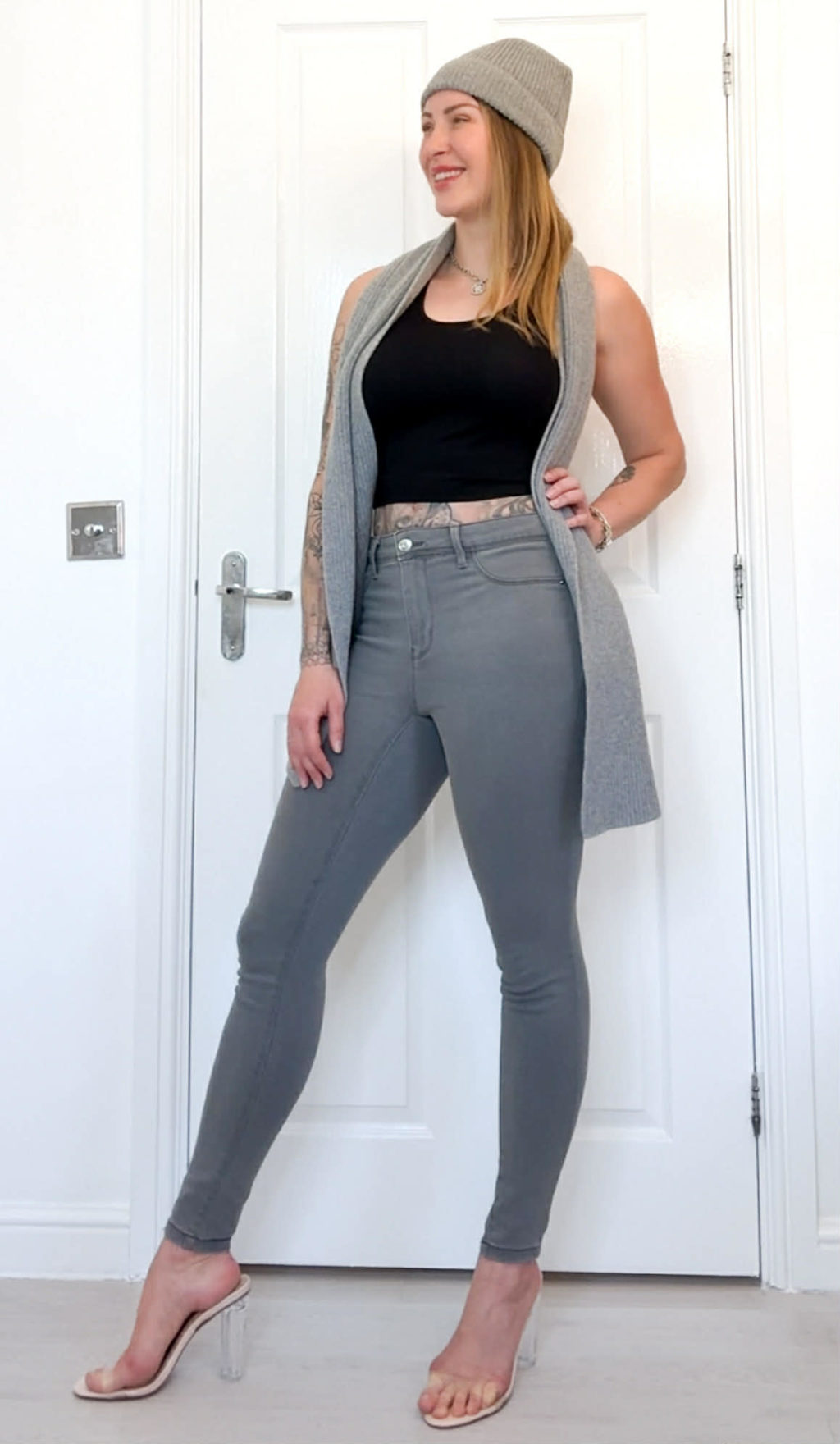
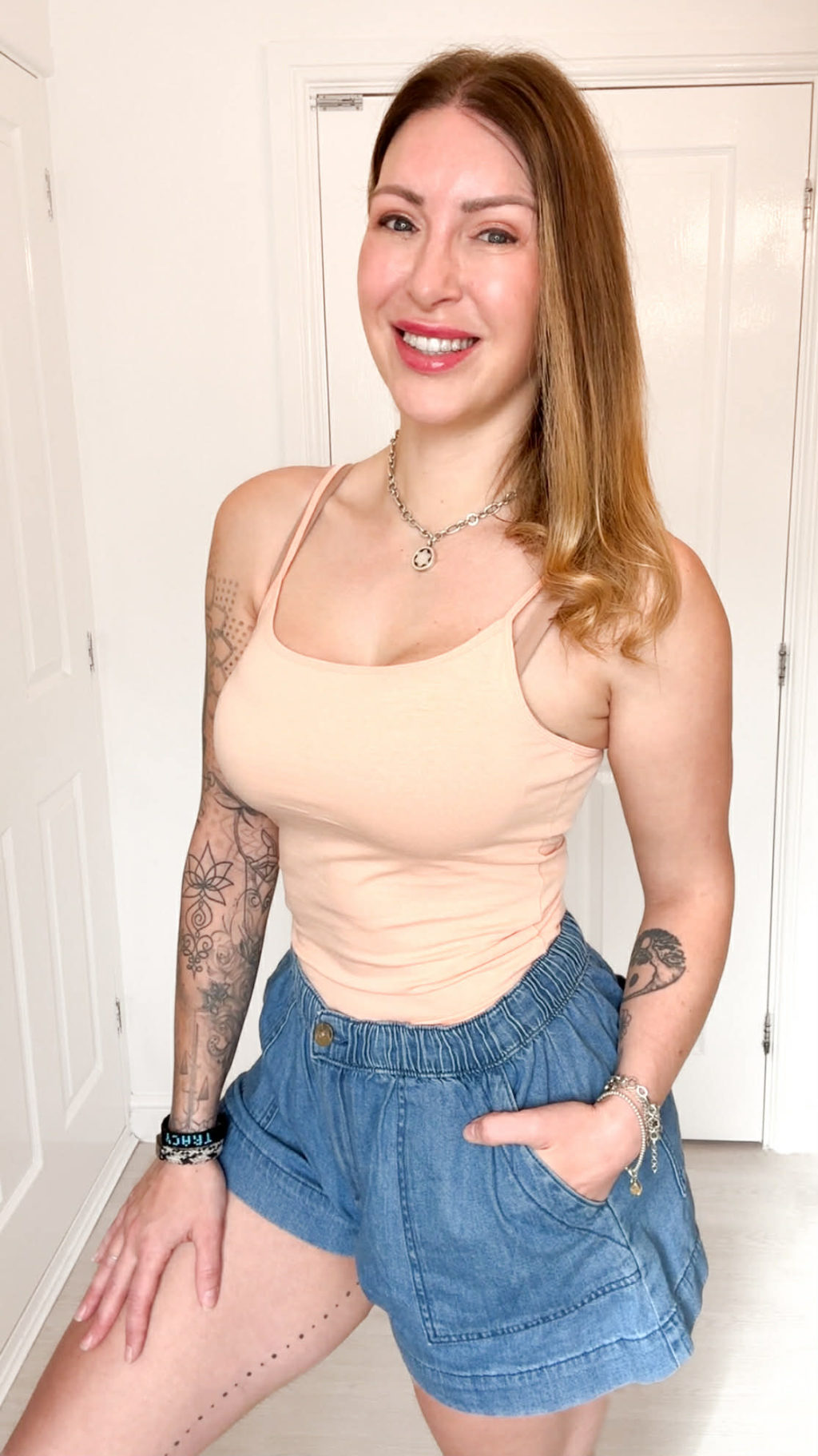
From the outside, Tracy Kiss does not look like someone who collapses without warning. She earned a professional bodybuilding card (known as a PRO card) in natural bodybuilding in 2017. She has maintained a fitness career alongside raising two children alone and running a content creation business. To anyone scrolling her social media, she is the picture of physical strength.
The reality is far more complicated.
Pain became my norm.
“I became a professional athlete because I used my daily pain as fuel for fitness,” she explains. “I didn’t understand why I hurt no matter how active I was. Medical professionals simply told me I was tired and weak because I had two young children and it was to be expected. This meant that the aches and pains that people experience when they work out at the gym didn’t put me off, because pain became my norm.”
She describes it as choosing to be a warrior rather than a victim: “I got angry at my pain and refused to back down. My body filled with adrenaline from being under threat and I found superhuman strength.”
But a decade on, that has shifted. “I am still incredibly strong compared to others my age, but equally as fragile as glass at the same time, and my body shuts off at the flick of a switch. I often collapse, can’t walk, and suffer from severe exhaustion without warning, never knowing what is ahead of me from one day to the next. It feels like I’m Jekyll and Hyde – will I feel superhuman strong and have stamina, or struggle to get out of bed for no reason? Who knows!”
The school run tells the story of how long she had been undiagnosed: “I’ve always walked my children to school, randomly collapsing and other school mums kindly driving me home as I apologised profusely and didn’t know why I’d collapsed. Now it’s entirely obvious that standing at the school gates had overwhelmed my inflammation, put pressure on my joints and caused me to pass out. But if you don’t know what’s happening or why, you can’t prevent it.”
Overcoming the Shame of Using a UK Access Card for Hidden Disabilities
Tracy has an Access Card – the UK scheme that helps disabled people communicate their needs discreetly. For a long time, she couldn’t bring herself to use it.
About the Access Card
The Access Card is a UK scheme that helps disabled people communicate access requirements without repeatedly explaining their condition. At Disability Horizons, we recommend the Access Card run by Nimbus Disability, over other schemes. Crucially, Nimbus Disability is disabled people-led – meaning the scheme is designed and run by the community it serves, not for it. You can find out more and apply at Access Card Online.
“I feel an incredible amount of judgement and shame for not looking disabled,” she says. “At the thought of having to explain myself for strangers to say ‘I’ve never heard of that’ or ‘it doesn’t exist, you’re not disabled.'”
Those concerns stopped her from using it for a long time.
“I showed my Access Card once to a member of staff in a London train station because I felt myself getting to the point of collapse. My hearing went, my heart was racing and my vision was clouding, and I knew that I had moments to either get into a toilet or sit down in the middle of the floor in front of hundreds of commuters to prevent myself from fainting. It became a do or die moment.”
The member of staff let her through. “I fell onto the floor and just cried because of how overwhelming it was.”
“I hope that one day I can sit in a disabled seat without feeling like everyone is accusing me of murder or fraud.”
“I hope that one day I can sit in a disabled seat without feeling like everyone is accusing me of murder or fraud for being selfish and not requiring it.
And I hope that others who face the same struggles can also make peace with the reality of being disabled being entirely different to our appearance or what society expects us to look like.”
The Psychological Toll of Self-Advocacy and Chronic Illness Masking
One of the most striking things about Tracy’s story is the contradiction at its heart. She has 4 million followers. She advocates loudly and publicly for others. And yet she struggles to advocate for herself.
“I can move mountains to provide for and protect my children – checking for monsters under their beds, defending them from wasps, catching spiders – but when it comes to myself I let it be,” she says. “I’ve spent a lifetime having to be strong for others. It’s hard to take off that armour and let your walls down and to admit to pain and suffering.”
The same instinct applies to disabled parking bays. Tracy’s son is disabled, but she avoids using disabled bays to dodge abuse from people who judge by appearance: “I’ve always put others above myself. When I see a person in a wheelchair or an elderly lady with a walking stick I instinctively think that their disability is more valid than my own, and in taking a space am I depriving those who need it more. I’m hard wired to gaslight myself just as doctors always have.”
She is, slowly, working on it: “I’m trying to approach my own dismissiveness towards myself with an unbiased outlook.”
How to Build a Flexible Business Around Chronic Illness and Fluctuating Energy
Tracy has been self-employed and working from home for nearly 20 years. Working from home began as a way to balance childcare and employment.
In hindsight, it was also helping her manage the symptoms of hEDS long before she received a diagnosis.
“Working from home has been my lifeline, and wasn’t something that I was initially even aware of how necessary it was,” she says. “In my late twenties I realised that working from home wasn’t simply to fit around my children, but essential to cope with exhaustion and pain before I even understood what was causing it.”
The practical reality of running a business around a chronic condition that can strike without warning has shaped everything about how she works: “I’ve had to learn to diversify my income, knowing that my health balances on a knife edge. I have multiple revenue streams to ensure that as and when I’m unable to work I have the ability to tide myself over for days, weeks or months at a time.”
Stockpiling content is central to her strategy: “As an influencer I have a library of images and videos created in advance that I can schedule to post daily. When I’m broken throughout the day, I’ll sit up all night to play catch up with work, which would be impossible to do with a 9-5.”
Pricing her time has also had to change: “I factor rest and recovery into everything that I do, because if I’ve stood in a supermarket queue for a handful of minutes longer than expected my legs can feel broken for days on end.
When I have a photoshoot and have to stand and hold poses I know that I’ll be bedridden afterwards. It’s like learning to hold your breath beneath water – how long will it last and how far can you go before you have no choice but to come up for air?”
Content Creation Tips: Building an Authentic Audience as a Disabled Creator
Tracy started sharing her life online in 2012, after the birth of her second child – before the word “influencer” existed.
“My following came from sharing my weight loss journey after having my second child. I wanted to share the reality of pregnancy and how my body changed, with nothing hidden or taboo. From stretch marks and loose skin to sweat patches and leaking nursing bras. I wanted to show other mothers that life doesn’t end after giving birth, it’s just the beginning.”
For Tracy, building an audience started with showing the reality of her life rather than a polished version of it.
“Showing my journey of absolute weakness to ultimate strength inspired others, whilst I held myself accountable for consistency.”
For disabled people wondering whether they need a massive following before any of this becomes viable, her answer is encouraging: “The world of social media is certainly changing and micro influencers are now finding a voice. You don’t have to have millions of followers for your opinion to matter or your contribution to make a difference. Brands have their own niche and target market – there is a place for every age and ability on social media, you simply have to find where best you belong.”
Disclosing a Late Neurodivergent and hEDS Diagnosis to Brands and Media
Tracy received her hEDS diagnosis in 2024. Speaking about it publicly has not been straightforward.
“It’s been very challenging for me to speak about it, as it’s so engrained in me to say ‘I’m fine’ when anybody asks how I am. Much like how a wounded animal will find a quiet corner to curl up and pass away, and you’re left shocked having not known anything was ever wrong, a lot of people with hidden disabilities suffer so terribly in silence.”
When it came to insurance forms and TV participation paperwork, she would always tick “no disability”:
“There was never a box to say ‘undiagnosed and helplessly suffering in silence.’ Ticking yes when I didn’t have any proof or permission made me feel like a criminal.”
Now, she lists ASD, ADHD and hEDS openly in her Instagram bio. The first time she formally disclosed her disability to a brand was for a television show filmed in late 2025: “The team were very supportive and understanding, as the presenter was also disabled and they were passionate about advocacy.”
She is candid about the limits of her experience in this area: “I’m only just coming out of the woodwork with my late diagnosis. Nothing has suddenly changed in my life other than having a formal diagnosis and my symptoms worsening with time. It hasn’t stopped me from working remotely – I just manage my recovery around my abilities from day to day.”
Financial Planning and Disability Benefits for Self-Employed Creators
Tracy does not currently receive disability benefits and has been self-employed throughout her working life. But she thinks about what lies ahead.
“I know in the future that I may find myself entirely unable to work and I understand that it’s a bridge that I will have to cross some day. We must all grow old – if we are fortunate to do so – and our physical abilities may change immeasurably. But when you live with chronic pain and disabilities it can happen far sooner than expected or planned.”
Her reflection on what she wishes she’d known is honest: “I wish I’d had the information surrounding my disability years prior to make earlier preparations for the future. But equally, the not understanding or knowing what was to come gave me the ignorance of thinking life is what we expect it to be, which at the time prevented me from worry.”
Finding Support Through Online Disability Communities
Perhaps the most remarkable thread in Tracy’s story is that the platform that built her career is also the platform that saved her health.
“I absolutely believe that social media is saving lives through raising awareness for conditions like hEDS,” she says. “It’s certainly changed my life for the better. Whilst it doesn’t cure me, it’s given me my diagnosis and a better understanding of my reality and how to manage my symptoms day by day.”
It raises a serious question about the state of NHS diagnosis for conditions like hEDS – particularly for women, who are disproportionately affected and disproportionately dismissed.
While online communities cannot replace medical diagnosis or treatment, many people with rare or under-recognised conditions find information and peer support through social media.
“Having a voice, speaking up and sharing our challenges allows us to understand symptoms better and educate others to be equipped to seek a diagnosis,” Tracy says. “It brings me comfort to think that sharing my story can make others feel less alone.”
Tracy Kiss is at tracykiss.com. Follow her on Instagram, Facebook, TikTok and YouTube. Or find all her links at allmylinks.com/tracykiss.
Frequently Asked Questions
Who is Tracy Kiss?
Tracy Kiss is a writer, content creator, wellness advocate and neurodivergent mother of two with more than 4 million followers across social media. She lives with Hypermobile Ehlers-Danlos syndrome (hEDS), ADHD and autism, all diagnosed later in life.
What is Hypermobile Ehlers-Danlos syndrome?
Hypermobile Ehlers-Danlos syndrome, often shortened to hEDS, is a connective tissue condition that can affect joints, pain levels, fatigue and day-to-day energy. Experiences vary, and some people face long delays before getting a diagnosis.
Why can hEDS be hard to diagnose?
hEDS can be hard to diagnose because symptoms may be dismissed, misunderstood or treated separately rather than seen as part of a wider pattern. Tracy describes spending years in pain before finding answers later in life.
What is an invisible disability?
An invisible disability is a disability that is not always obvious to other people. Tracy’s experience shows how judgement from strangers can make it harder for disabled people to ask for access support, use priority seating or explain their needs.
How has Tracy Kiss built a flexible career around chronic illness?
Tracy has worked from home, created content in advance and built different income streams so she can work around changing pain, fatigue and energy levels. Her approach shows why flexibility matters for many disabled and chronically ill creators.
What does Tracy Kiss’s story show during Disability Pride Month?
Her story shows why disabled people’s lived experience matters. It highlights late diagnosis, hidden disability, medical dismissal, self-advocacy and the role online communities can play in helping people feel less alone.