The TL:DR
- Active Hands is an extraordinary business. Almost twenty years old, clinically endorsed, with years of customer loyalty and an untapped international market. This is an established brand with global potential, not a niche disability project.
- All five Dragons declined to invest. The business isn’t weak; the Den was the wrong room. Active Hands doesn’t need a generalist with a cheque. They need specialist distribution partners in Australia, Canada, Germany, and the US. The Dragons couldn’t offer that.
- The broadcast segment contained a textbook run of Social Model failures: Medical Model assumptions, the “what happened to you” question, and a before/after tragedy narrative. All in under a minute. On prime-time BBC One. In 2026.
- The Dragons were so busy processing the disability, they never fully evaluated the business. The frame was set early: “inspiring founder, niche market.” It coloured everything that followed. That’s an editorial failure as much as it is a failure of the Dragons to see the real business.
- The BBC failed on basic accessibility by not clearly naming the company on screen. Viewers were asking on X within minutes who the business was. We’ve named them throughout. We’ll keep doing it.
- Disabled entrepreneurs watching this will have felt it. If an experienced CEO with a profitable business and an MBE couldn’t get a fair hearing without the conversation sliding into personal medical history, first-time inventors with a brilliant idea and a prototype will wonder whether there’s any point in trying. The BBC needs to do better.
- The real win was awareness: community pride, the Dragons’ Den bounce, and national exposure for products that genuinely change lives. But Active Hands deserved to be assessed as the serious commercial business it is. It wasn’t. And that’s worth saying plainly.
Active Hands on Dragons’ Den: When Disability Innovation Meets Investment Reality
I’ll be honest. Watching Active Hands on Dragons’ Den last Thursday felt slightly uncomfortable. I was rooting for them, and I came away disappointed. Not because Rob and Jo did anything wrong. They were outstanding. But the way the pitch unfolded said something important about how far mainstream culture still has to travel around disability.
Later in this piece I’ll criticise the BBC for not making it clear enough who the business actually was. I didn’t see or hear the company name mentioned at all? To me this is extraordinary!
I’m not going to make that mistake here. Active Hands are an exemplary, customer-focused, user-led, innovative company whose products have genuinely changed lives. Browse their full range here:
Now, let’s get into it.
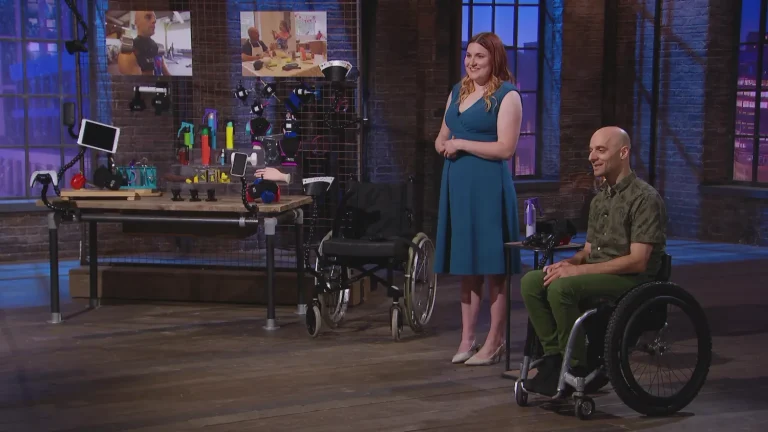
Active Hands appeared on Dragons’ Den (Series 23, Episode 4, Thursday 19 February 2026) with CEO Rob Smith MBE and business development manager Jo, asking for £75,000 in exchange for 5% equity. Founded after Rob’s spinal cord injury in 1996, the company creates adaptive gripping aids that support disabled people with reduced hand function to live independently. The business achieved £738,000 turnover and £19,000 profit last year, predicted £60k this year and with a team of eight people. All five Dragons declined to invest.
| Topic | What Happened |
| Investment Ask | £75,000 for 5% equity |
| Turnover | £738,000 (last year) |
| Profit | £19,000 profit (last year), £60k predicted this year, after £5,000 loss the year before due to supplier inflation |
| Team Size | 8 people |
| Outcome | No investment secured |
| Dragon Concerns | Scalability and limited perceived value-add |
| Community Reaction | Strong goodwill and pride within disability circles |
A Business Built From Lived Experience
I’ve known Rob for over 15 years through Kandu, a small network of disabled entrepreneurs, and from regularly exhibiting at the same trade shows. Over that time, I’ve watched him do the steady work that actually builds a business: listening to customers, talking with occupational therapists, gathering feedback, and quietly improving his products year after year.
Active Hands began in 2007 with a gripping aid Rob made because he needed it himself. The range grew directly from conversations with disabled customers, introducing versions for those with limb difference or specific sports and tasks in mind. EasySpray and NoseySpray, which turn press-down aerosols into a squeeze action, the Sixth Digit finger support for hand function, and practical daily living aids like nail clippers and phone holders.
What I find equally telling is what they’ve done when other good products have struggled. The Nimble finger-worn package opener was taken on by Active Hands when the original company couldn’t continue, and the Soloc belt system was acquired from its original inventor to keep it in production and available. In both cases they recognised the value, kept the products alive, and made sure disabled customers didn’t lose access to something that worked.
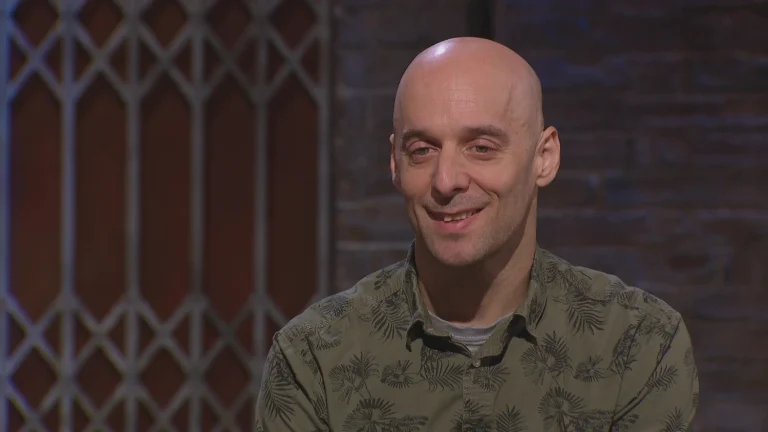
The Rob you saw in the Den is the one I’ve known for years: straightforward, knowledgeable, and grounded in lived experience. That’s how he runs his company.
A Small Moment, A Bigger Pattern
Early in the pitch, there was a brief exchange that stuck with me. No one was being hostile, and there was no obvious malice. But in less than half a minute, a well-intentioned, socially aware investor repeated several assumptions that disabled people have been challenging for years, without seeming to realise they were doing it.
Click here to watch this exchange, jump to 32mins
Television editing means we can’t know exactly how any exchange unfolded in full before the cut. But as broadcast, one of the Dragons appeared to frame their opening question around a family member who uses a wheelchair, and that person’s fear of losing hand function. “As long as she can do as much as she can with the hands, she can stay independent.” Then, hopefully: “So does it actually improve the function of your hands?”
Rob explained clearly and patiently that no, the products aren’t designed to restore hand function. They’re designed to work with the hand function you have.
There was a visible deflation. “Oh.”
That “oh” is doing a lot of work. What it reveals is the Medical Model assumption sitting underneath the question: it seems that the only fully satisfying answer they wanted would have been “yes, it fixes you”.
A product that enables independence without curing the underlying condition is somehow a lesser thing?
Once it was clear the products weren’t designed to restore hand function, the focus shifted. “Rob, can I ask — what is this spinal injury? Do you mind talking about it?”
It’s a question many disabled people recognise. Discussing impairments isn’t off limits, but leading with it in a professional setting changes the frame. In job interviews, meetings, and first introductions, disabled people are often asked to explain their bodies before their work.
Rob was standing there as a CEO with 18 years of experience, a profitable company, and a team of eight. In that moment, the attention moved away from his business and onto his injury. The conversation briefly positioned him as someone to be examined, rather than as the person running the company.
He answered graciously. Cliff fall, 1996. And the response completed the set: “Gosh. A big shock. Because you were very active obviously.”
And there, in one sentence, is the before/after tragedy narrative that disability activists have been pushing back against for years. The implicit story: there was a real Rob, an active Rob, and then the accident happened and now he manages.
Let’s be specific about what that erases. Rob Smith is a successful businessman. An employer. He has a wife and children. He has an MBE. He has spent almost 20 years building something genuinely useful that thousands of people rely on. All of that, the whole of his adult life, compressed into “you like to keep yourself active then.” As if everything since 1996 is just coping. Just staying busy after the bad thing happened.
Watching it felt like footage from a different era. And the uncomfortable truth is: it wasn’t. It was prime-time BBC One, February 2026.
It’s also worth noting that programmes like Dragons’ Den are shaped as much in the edit suite as in the room. Producers choose which questions air, which answers get trimmed, and which moments are lingered on. Whether this exchange unfolded exactly as broadcast, or whether editorial choices amplified it, the effect on screen was the same. And that’s worth naming.
Good intentions and understanding are not the same thing. When someone widely seen as socially progressive can move through familiar Medical Model assumptions, slip into an inspiration narrative, and lead with “what happened to you?” — all in under a minute — it says something. Not about one individual being careless, but about how deeply embedded those patterns still are. We all carry a learning journey around disability, and that includes everyone asking questions on flagship BBC programmes.
Rob responded calmly and professionally, as he always does. But disabled founders shouldn’t have to absorb those moments smoothly in order for their businesses to be taken seriously. Composure in the face of misplaced framing shouldn’t be part of the pitch.
The Tension the Dragons Couldn’t Ignore
On paper, the numbers were solid but not spectacular by Dragons’ Den standards. £738,000 turnover, with a £60k profit predicted this year shows clear demand. The business has a team of eight people, bouncing back from an £5,000 loss the previous year. That loss, Rob explained, came from not raising prices quickly enough after supplier inflation hit.
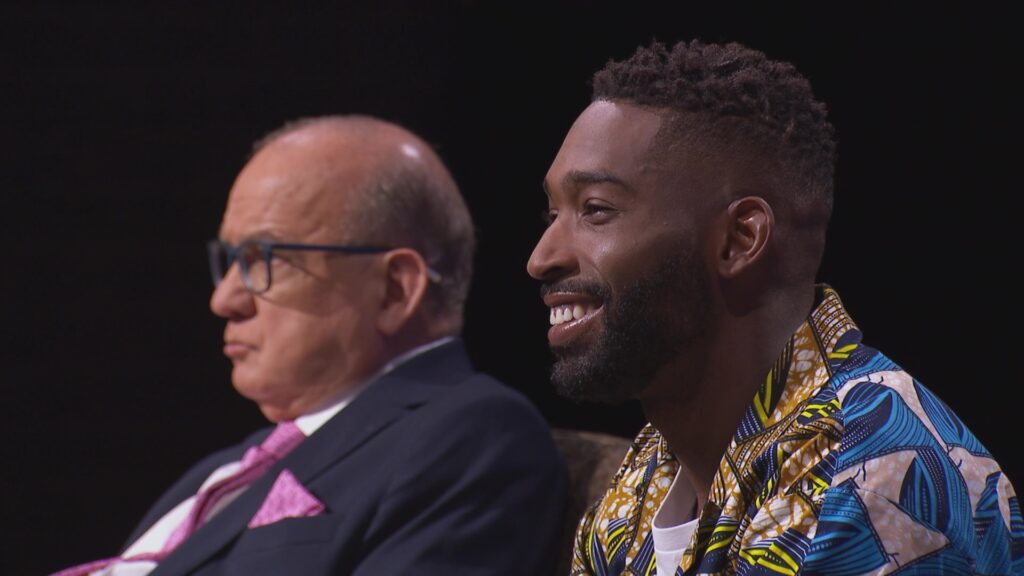
Yet the Dragons hesitated. Touker Suleyman exited early. Tinie Tempah wasn’t interested. One Dragon felt she couldn’t add real value. Steven Bartlett questioned scalability. Peter Jones praised Rob as a “social entrepreneur” and floated a possible foundation-based collaboration, but stepped back from investing.
Their concerns centred on scale. Could Active Hands grow into a multi-million-pound powerhouse? Could margins increase significantly? Was the market big enough? These are standard venture capital questions, but they were, I’d argue, the wrong ones.
Split Loyalty: Profit vs Community
There’s a split loyalty that sits behind many disability-led businesses. When you are part of the community you serve, decisions land differently.
Rob knows his customers. Many are not wealthy. Many need these products to work, cook, train, or care for themselves. He lives that reality himself. You know what disability-related costs do to a household budget. You understand what “just £10 more” can mean when you’re already juggling extra expenses.
Pricing, margins, and growth targets carry ethical weight when you are part of the community you serve. It becomes harder to chase aggressive markups or luxury positioning. That constant balancing act between financial sustainability and fairness actually makes the business stronger.
It builds trust, shapes product decisions, and keeps the focus on independence rather than status. That tension may not excite investors looking for exponential returns. It does, however, build lasting loyalty.
What Active Hands Actually Needs, and Why No Dragon Could Offer It
Here’s my honest read on why the Den was simply the wrong room.
Active Hands doesn’t have a UK credibility problem, a brand awareness problem, or a trust problem. Within the communities that matter: wheelchair users, occupational therapists, rehabilitation centres, disability sports coaches, adaptive fitness instructors, they are already the name. That kind of embedded, clinically-endorsed reputation takes years to build and can’t be bought with a cheque from a TV show.
The real opportunity isn’t to turbocharge the UK market. Taking a model that already works, trusted brand, clinically endorsed, community rooted, quality products with 15-year customer loyalty — and replicating it internationally is where the growth lies. Australia. Canada. Germany. The United States. Countries with established disability communities, rehabilitation infrastructure, and the same gap in the market that Rob identified here in the late nineties.
That’s a partnerships and distribution problem, not a capital one. It requires people with existing relationships inside healthcare systems, disability organisations, and rehabilitation networks in specific countries. Someone who can open the right doors in Munich or Melbourne or Minneapolis. No Dragon on that panel could offer that. Peter Jones’s retail connections don’t transfer to a German prosthetics supplier. Steven Bartlett’s digital audience doesn’t map onto occupational therapy networks in Canada.
The Dragons passed on a business that had already outgrown what they could offer.
Visibility Without Clear Naming
One frustration stands out and deserves calling out directly. During the programme, the company name “Active Hands” was not clearly repeated on screen. Within minutes of broadcast, viewers were on twitter/X asking who the business was. That tells you everything.
The BBC has strict rules about promotion, and that’s understandable. But when the product is genuinely useful and the audience includes disabled people who may need it, clearer naming is basic accessibility. If your show features a product that could improve someone’s daily life, making it findable is the least you can do.
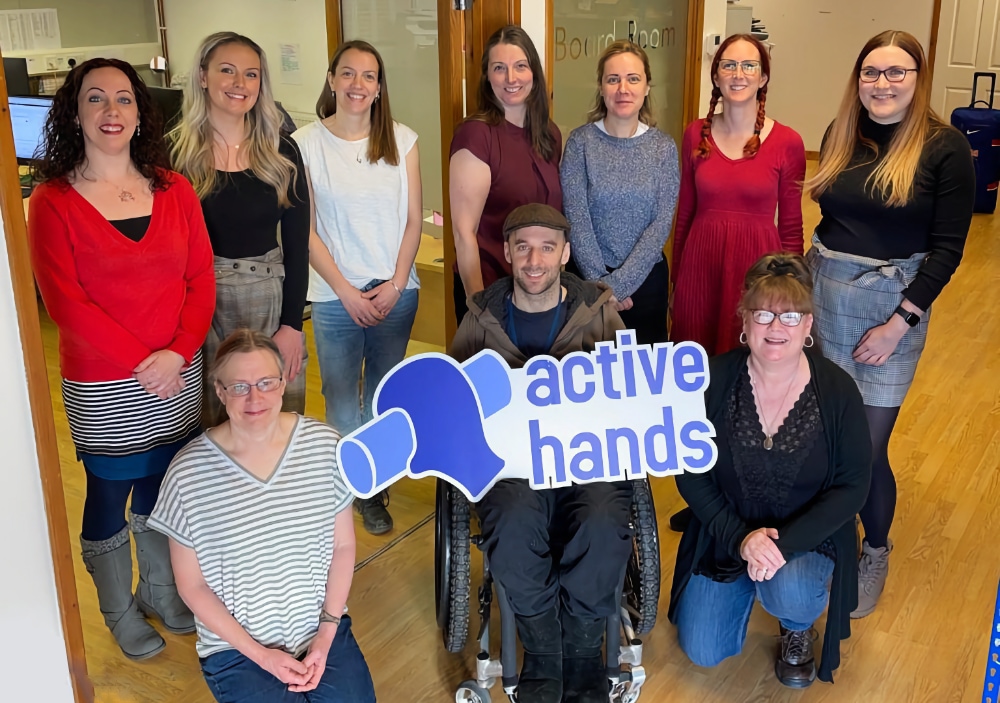
I said at the top of this piece that I wouldn’t make that mistake. So one more time: Active Hands. Find them at Active Hands.
You’re welcome.
Community Response: The Praise That Actually Counts
The most meaningful reaction came from the people who already know the problem. On LinkedIn, wheelchair user and creator Ben Clark wrote that he “we a lot to Rob and active hands as without them I probably wouldn’t be able to do my YouTube channel”. The gripping aids have lasted him around 15 years.
THIIS, the trade magazine for mobility retailers, high street disability shops, and wheelchair and mobility manufacturers, covered the appearance. Putting Active Hands directly in front of the professional buyers and stockists best placed to act.
Within disability circles, the tone was largely pride. That visibility often translates into what founders call the “Dragons’ Den bounce”: increased website traffic and sales in the weeks following broadcast.
What This Means for Disabled-Led Innovation
Some of the most genuinely useful products in the disability space didn’t come from R&D departments or market research. They came from a person who needed something that didn’t exist, or a parent who watched their child struggle and decided to fix it.
People who became inventors, then manufacturers, then business owners despite not having a background in any of those things. The problem in front of them was real and nobody else was solving it.
That path is harder than it looks. Building a product from lived experience is one thing. Dealing with suppliers, IP, pricing, distribution, and retail is another entirely. Dragons’ Den should be exactly the place those people can go: for capital, yes, but chiefly for the expertise, connections, and credibility that turns a good product into a sustainable business.
After watching this appearance, some of those founders will think twice.
If a polished, experienced CEO with 18 years of trading, a profitable business, and an MBE couldn’t get a fair hearing without the conversation sliding into personal medical history and inspiration narratives, what chance does a first-time inventor with a brilliant idea and a prototype feel they have?
The BBC and the production team need to do better. The show positions itself as a place where great ideas get a genuine hearing. For disability-led innovation to get that hearing, the framing has to change first.
What the Show Got Wrong, and What the Business Got Right
The most telling moment wasn’t any single question in the Den. It was the overall shape of how the pitch was received. The Dragons were so busy processing the disability context — the injury, the personal story, the “oh” moment — that by the time they got to evaluating the actual business, the frame had already been set. Not “established brand with global potential.” Just “inspiring founder, niche market, not really our space.” The blinkering happened early, and it coloured everything that followed.
That’s not unique to those five people. It’s what happens when disability is treated as the headline rather than the background. The BBC’s edit reinforced it. The questions reinforced it. And the result was that a business with a waiting international market, 15 years of proven customer loyalty, and clinical endorsement across rehabilitation networks walked out of that building having been assessed as a disability story rather than as a business.
Active Hands deserved better than that. Not because Rob Smith uses a wheelchair and has done well despite it, that framing is exactly the problem. But because by any serious commercial standard, this is a company with a proven model, a loyal global customer base in waiting, and products that people rely on for their independence every single day.
The Dragons came looking for the next big thing and couldn’t see it because a wheelchair was in the way.
Find the Products
Browse the full Active Hands range here, we are proud to sell part of the range on our shop here Disability Horizons Shop.